
What’s Next for Augmented Reality in eLearning
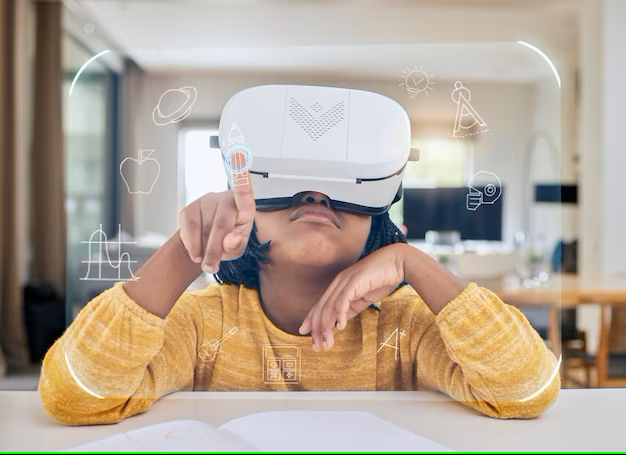
Image Source: FreeImages
In this article, we will explore the latest trends and advancements in augmented reality in eLearning and discuss how it can revolutionize the way we learn and teach. Get ready to embark on an exciting journey into the future of eLearning!
Introduction
In the ever-evolving landscape of eLearning, augmented reality (AR) has emerged as a game-changer. With its ability to overlay digital content onto the real world, AR opens up exciting possibilities for enhancing the learning experience. But what’s next for augmented reality in eLearning?
As technology continues to advance at a rapid pace, we can expect to see AR become more immersive, interactive, and seamlessly integrated into eLearning platforms. Learners will be able to interact with 3D models, simulations, and virtual environments, bringing complex concepts to life.
By incorporating AR into eLearning, brands can create engaging and memorable learning experiences that captivate learners’ attention and improve knowledge retention. Imagine learners exploring ancient historical sites with virtual tour guides or practicing crucial skills through realistic simulations.
Moreover, the rise of mobile devices and the increasing affordability of AR hardware are driving the adoption of AR in eLearning. This means that learners can access AR-enhanced content anytime, anywhere, making the learning experience more flexible and accessible.
Benefits of Using Augmented Reality in eLearning
Augmented reality offers numerous benefits when integrated into eLearning courses. Firstly, it provides a highly engaging and interactive learning experience. Learners can interact with virtual objects and environments, making the learning process more immersive and enjoyable. This level of interactivity increases motivation and enhances knowledge retention.
Secondly, AR allows for the visualization of complex concepts. Abstract ideas can be transformed into tangible visuals, enabling learners to grasp difficult concepts more easily. For example, in a physics course, learners can use AR to visualize the movement of atoms or explore the solar system in real-time.
Additionally, augmented reality enables personalized learning experiences. Learners can access AR content tailored to their specific needs and learning styles. This customization ensures that learners receive the right information at the right time, promoting individual growth and understanding.
Current Trends and Statistics of Augmented Reality in eLearning
The adoption of augmented reality in eLearning is on the rise, with several notable trends and statistics supporting its popularity. According to a report by TechJury, the global AR market is expected to reach $61.39 billion by 2023. This indicates a growing interest in AR technology across various industries, including education.
Furthermore, a survey conducted by the eLearning Industry found that 67% of respondents believe that augmented reality will play a significant role in eLearning in the near future. This indicates a strong belief in the potential of AR to transform the learning experience.
Another trend is the integration of AR into mobile devices. With the increasing affordability of smartphones and tablets, learners can easily access AR-enhanced content on their personal devices. This accessibility allows for a seamless learning experience, regardless of location or time constraints.
Examples of Successful Augmented Reality Applications in eLearning
Numerous successful examples showcase the effectiveness of augmented reality in eLearning. For instance, the National Geographic Society has developed an AR app called “Explore VR” that allows learners to embark on virtual expeditions to different parts of the world. Learners can explore diverse ecosystems, encounter wildlife, and learn about different cultures, all through the power of AR.
Another example is the medical field, where AR is being used for training purposes. Medical students can use AR to simulate surgical procedures, allowing them to practice critical skills in a safe and controlled environment. This practical application of AR enhances the learning experience and better prepares students for real-life scenarios.
Furthermore, AR is being used in language learning to provide an immersive environment for learners. Apps such as “MondlyAR” allow learners to practice speaking a foreign language by interacting with virtual characters and objects. This interactive approach not only improves language proficiency but also boosts learners’ confidence in real-life conversations.
How to Incorporate Augmented Reality in Your eLearning Courses
Incorporating augmented reality into eLearning courses requires careful planning and consideration. Here are some steps to follow when integrating AR into your courses:
- Identify learning objectives: Determine the specific learning outcomes you want to achieve through the use of AR. This will help you align the content and activities with the desired educational goals.
- Choose appropriate AR tools and platforms: Research and select the AR tools and platforms that best suit your needs. Consider factors such as ease of use, compatibility with your existing eLearning platform, and the level of interactivity offered.
- Design AR experiences: Create engaging and interactive AR experiences that align with the learning objectives. Use 3D models, animations, and simulations to enhance the learning process and make it more immersive.
- Test and evaluate the effectiveness: Conduct pilot tests with a small group of learners to gather feedback and assess the effectiveness of the AR content. Make necessary adjustments based on the feedback received.
- Integrate AR into the eLearning platform: Integrate the AR content seamlessly into your eLearning platform to ensure a smooth learning experience for your learners. Provide clear instructions on how to access and interact with the AR content.
Tools and Platforms for Creating Augmented Reality Experiences in eLearning
Several tools and platforms are available to create augmented reality experiences in eLearning. Here are a few popular ones:
- ZapWorks: ZapWorks is an AR development platform that allows you to create interactive AR experiences without coding. It provides a range of templates and assets to get you started quickly.
- Unity3D: Unity3D is a powerful game development engine that can also be used to create AR experiences. It offers a wide range of tools and resources for building immersive and interactive AR content.
- Vuforia: Vuforia is an AR development platform that specializes in image recognition and tracking. It enables you to create AR experiences that are triggered by specific markers or objects.
- Adobe Aero: Adobe Aero is a user-friendly AR authoring tool that allows you to create AR experiences using 3D objects and animations. It integrates seamlessly with other Adobe Creative Cloud applications.
- ARKit and ARCore: ARKit (for iOS) and ARCore (for Android) are software development kits provided by Apple and Google, respectively. They enable developers to create AR experiences specifically for their respective platforms.
Best Practices for Designing and Implementing Augmented Reality in eLearning
When designing and implementing augmented reality in eLearning, it is important to follow some best practices to ensure a successful integration. Here are a few tips:
- Align AR content with learning objectives: Ensure that the AR content directly supports the intended learning outcomes. Avoid adding AR elements just for the sake of novelty.
- Keep AR experiences user-friendly: Design AR experiences that are intuitive and easy to navigate. Provide clear instructions and guidance on how to interact with the AR content.
- Optimize for different devices: Consider the different devices learners may use to access the AR content. Optimize the content to work seamlessly on various screen sizes and operating systems.
- Provide feedback and assessment: Incorporate interactive elements in the AR experiences that allow learners to receive feedback and assess their understanding. This ensures that learners are actively engaged and motivated to learn.
- Continuously evaluate and improve: Regularly assess the effectiveness of the AR content and make necessary improvements based on learner feedback. AR technology is constantly evolving, so it is important to stay updated with the latest advancements.
Challenges and Limitations of Augmented Reality in eLearning
While augmented reality offers numerous benefits, it also presents some challenges and limitations in the context of eLearning. Some of these include:
- Cost: Developing AR content can be expensive, especially if custom development is required. The cost of hardware, software, and maintenance should be considered when planning to incorporate AR into eLearning courses.
- Technical limitations: AR experiences may require high processing power and memory, which can limit accessibility on certain devices. It is important to optimize the content for different platforms and ensure compatibility.
- Learning curve: Both learners and instructors may need time to adapt to the use of AR technology. Training and support should be provided to ensure a smooth transition and effective utilization of AR in eLearning.
- Content creation challenges: Designing and creating AR content can be complex, requiring specialized skills and resources. Collaboration between instructional designers, developers, and subject matter experts is essential for successful content creation.
Future Prospects and Advancements in Augmented Reality for eLearning
The future of augmented reality in eLearning looks promising, with several advancements on the horizon. Here are some potential developments to look out for:
- Wearable AR devices: As AR hardware becomes more advanced and affordable, wearable devices such as smart glasses may become commonplace in eLearning. Learners will be able to access AR content hands-free, further enhancing the immersive experience.
- Enhanced interactivity and gamification: AR will continue to evolve, offering more interactive and gamified learning experiences. Learners will be able to participate in virtual scenarios, solve problems, and collaborate with others in real-time.
- Artificial intelligence integration: The integration of AI and AR in eLearning will enable personalized learning experiences on a whole new level. AI algorithms can analyze learner data and provide real-time feedback and recommendations based on individual learning styles and preferences.
- Social learning in AR: AR can facilitate social learning by allowing learners to interact with virtual avatars or real-time collaborations with peers. Learners will be able to engage in group activities, discussions, and simulations, fostering a sense of community and shared learning experiences.
Conclusion: Embracing the Future of eLearning with Augmented Reality
Augmented reality has the potential to revolutionize the eLearning landscape by providing immersive, interactive, and personalized learning experiences. With advancements in technology, the integration of AR into eLearning has become more accessible and affordable than ever before.
By leveraging AR, educators and instructional designers can create engaging and memorable learning experiences that captivate learners’ attention and improve knowledge retention. The future of eLearning with augmented reality holds exciting possibilities, from wearable devices to enhanced interactivity and AI integration.
As we embrace the future of eLearning, let us embrace the power of augmented reality and unlock the full potential of digital learning. The journey into the world of AR-enhanced eLearning has just begun!